Building Blocks For a Better Web

IPFS is a constellation of open-source tools for content addressing.

using IPFS in production at
what builders say

Not a platform to migrate to. A property you add.

Every tool in the IPFS constellation makes two commitments. Pick one to see it in motion, and grab the building blocks you need.

Hash around, and find out.

↓ drop a file, edit, or paste a CID
sha-256 · 0 bytes
anatomy of a CID

Running in science labs, game studios, art vaults, and low earth orbit.

Anywhere data needs to be verifiable, CIDs are helpful. A sample of what teams have built with the IPFS tools at the core.

Public, private, and everything in between

The same content-addressing model runs on the open internet or a closed network. Same CIDs, different routing.

Public

Nodes discover peers via the Amino DHT and IPNI. Any compliant node can join and find content, no coordination required.

Hybrid

Public peers, private data. Content is encrypted. CIDs route over the Amino DHT while ciphertext stays opaque to every transit node.

Private

All peers share a swarm key. Routing and transfer stay within the closed network. Nothing routes in or out without it.

Trustless Gateways

Gateways pull content from the IPFS network and serve it over HTTP. Browsers verify data against the CID locally, trust is rooted in CID, not the gateway.

Pick the tool that fits the job.

Start from the problem. Each row maps a real use case to the tools that solve it. Filter by language to narrow quickly.

Use CIDs in your own stack

Use DASL for simple content-addressed values; reach for full IPLD when you need linked data or Merkle structures. Boxo provides Go building blocks for CID handling and IPFS protocols.

Share data in a private network

Run Kubo with a swarm key for a closed IPFS network, or use iroh-blobs for lightweight QUIC-native transfer.

Publish from your own node

Run a Kubo or Helia node to pin and serve content; use ipfs-cluster for coordinated pinning across multiple nodes.

Publish via a hosted service

Upload to a pinning service, they handle replication, availability, and IPNI/DHT announcements.

Publish a content-addressed static website

Drop ipfs-deploy-action into your CI pipeline to get a CID per build and pin it automatically. Omnipin offers one-click pinning via MetaMask.

Distribute signed release artifacts

Publish binaries, model weights, or data sets as signed CIDs bound to their source git commit, seedable over iroh-blobs, HTTP, IPFS, and BitTorrent.

Verified retrieval in browsers

Fetch and cryptographically verify IPFS content directly in the browser with no trusted gateway required.

Archive & transfer with CAR files

Pack content-addressed blocks into a single CAR (Content Addressable aRchive) file for storage or transfer; verifiable and self-describing.

Encode IPLD data (DAG-CBOR / DAG-JSON)

Serialize linked data with the DAG-CBOR and DAG-JSON codecs, the IPLD formats that give you deterministic encoding and CID links between blocks.

Build UnixFS file trees

Represent files and directories as IPLD with UnixFS, the data model behind chunked files and folders on IPFS.

Debug & inspect retrieval

Check whether a CID is retrievable, inspect its DAG, and test gateways and IPNS records when content is not resolving as expected.

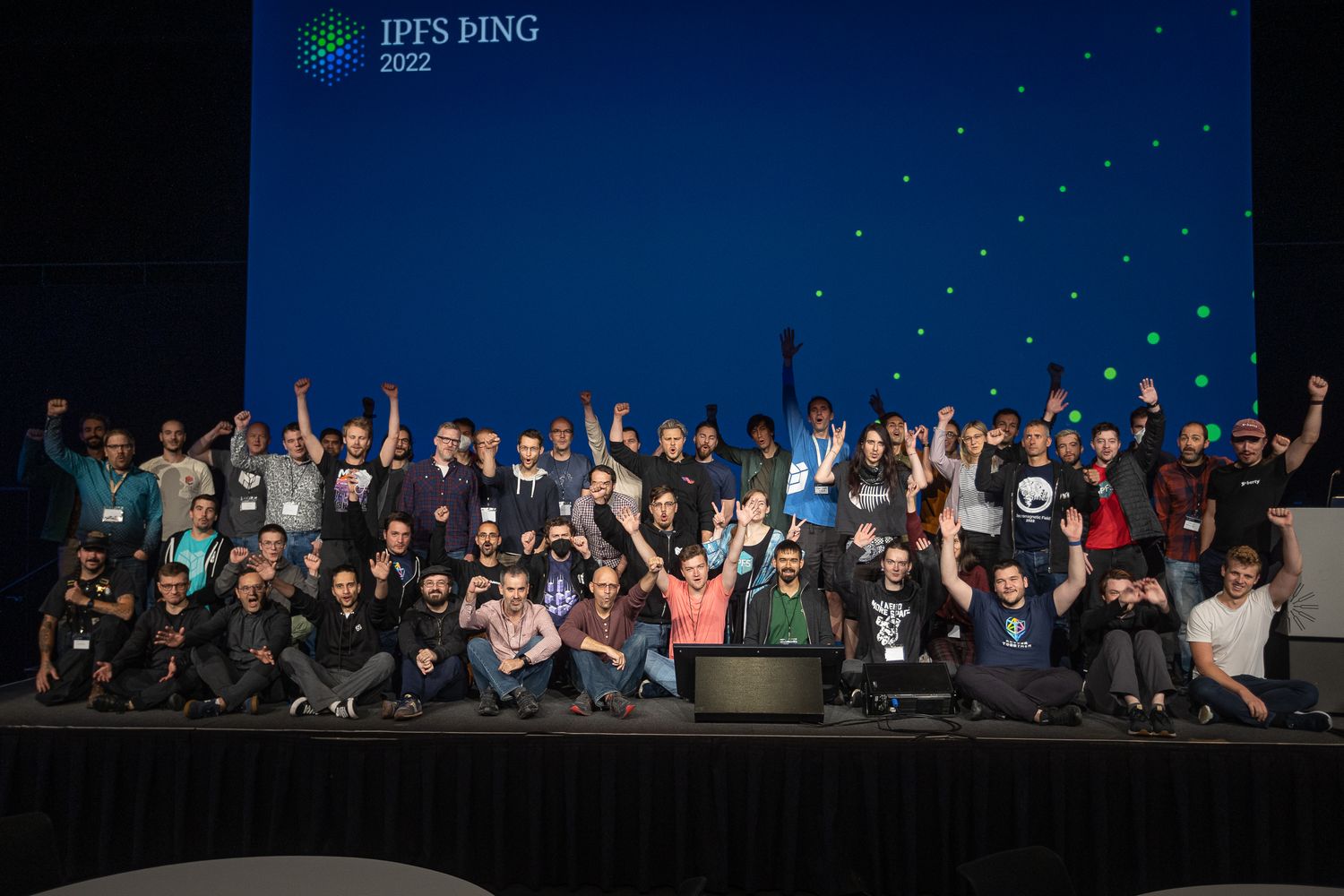
By the community, for the community.

IPFS is built in the open by a thriving community. Chat with builders, propose changes, and find the next event near you.